
Santa Rosa
Serving you with locations in:
- Rohnert Park
- Santa Rosa
Quick Links
Current members can view and manage their electronic health record, connect with their doctors, make appointments and more at kp.org
- E-mail your doctor. external page
- View your lab results. external page
- Pay your bill online. external page
News & Events
2023-24 Flu Season – Flu Vaccines Available
Protect yourself and your loved ones by getting a no cost flu shot. For your safety and convenience, flu vaccinations are available for adults and children, 6 months and older. Please get vaccinated – it’s your best defense against serious health risks this season, and now more than ever, it’s important to stay safe and stop the spread.
Member vaccination information: kp.org/mydoctor/flu
Flu shot dates and locations are subject to change. Before you go, visit kp.org/mydoctor/flu or call 1-800-573-5811 for the most up-to-date information.
Please note:
We anticipate high demand for flu vaccinations in some areas. To minimize your wait times, help ease vehicle congestion, and ensure the safety of those visiting our facilities, please follow these guidelines when coming for your flu shot:
- Bring a photo ID and your Kaiser Permanente member ID card.
- Wear short sleeves or clothing that allows easy access to your upper arm. Depending on local county guidance, you may be required to wear a mask.
- Do not block fire zones, disabled parking spaces, or any facility entrances.
- Members may also receive a flu vaccine during a scheduled care appointment at any of our locations.
Latest Updates on COVID-19 Testing
Most of the time, you can use an easy and reliable no-cost home antigen test for your COVID-19 testing needs.
PCR tests are used when directed by your doctor or when you’re required to show a negative PCR test for international travel or in circumstances where self-tests are not an option, such as to prove a negative COVID-19 test. Please check testing requirements prior to choosing a testing option.
You can now get a rapid PCR test with results in 24 hours or less at our convenient Northern California Kaiser Permanente testing locations. To get your test, start with an E-visit.
Visitor Policy and COVID-19 Information
We have updated the visitation guidance for hospital and ambulatory settings based on the most recent public health order by the CDPH to include the key changes below:
Hospitals and clinics may now allow all patients to have visitors without restriction.
Visitors are no longer required to show proof of vaccination or of negative COVID-19 test result to visit their family or friends in the hospital.
Effective April 3, 2023, per updated guidance from the California Department of Public Health, masks for visitors are no longer required at Kaiser Permanente facilities, except where mandated by governmental and regulatory agencies or our local infection prevention experts. Currently, masks are encouraged upon entrance to the hospital and throughout your visit. Patients and visitors should check themselves for common COVID-19 symptoms prior to entering our facilities and can continue to request and voluntarily use masks as a recommended tool to prevent the spread of COVID-19 and other respiratory-like illnesses.
Medical Office Building 2 Construction Project Begins
On Thursday, May 26, a construction project at Medical Office Building 2 on the main campus required cordoning off a large section in the center of the building’s lobby. Signs are posted to direct members around the construction area and highlight where to access the elevators, stairwells and first-floor clinics.
The Medical Office Building 2 lobby and first floor clinics will remain open on weekdays.
The COVID-19 Vaccine Clinic, which operates on the third floor of Medical Office Building 2, will be closed for Sat., June 4, and Sat., June 18.
This construction project includes painting and the installation of new flooring.
COVID Vaccine Clinic Hours at Kaiser Permanente Santa Rosa
2023-2024 Covid Vaccine Information
Protect Yourself and your loved ones by staying up to date with the most current COVID-19 vaccine. For your safety and convenience, COVID-19 vaccines are available at your local Kaiser Permanente per CDC guidelines for adults and children, aged 6 months and older. Please get vaccinated, it is the best defense against serious health risks this season.
COVID-19 Vaccine availability dates and locations are subject to change. Before you go to your local clinic, please visit COVID-19 Vaccine Locations | My Doctor Online (kaiserpermanente.org) or call Advice Nurse 707-393-4044 at for the most up-to-date information.
With every COVID-19 vaccine update, we anticipate high demand initially and to minimize your wait times, help ease vehicle congestion and ensure safety of those visiting our facilities, we ask that you follow these guidelines when coming for your covid vaccine:
- Whenever possible, please book an appointment ahead of time. Your local Injection Clinic may have walk in hours; availability is not guaranteed without an appointment.
- Bring your photo ID and your Kaiser Permanente member ID card.
- Wear short sleeves or clothing that allows easy access to your upper arm.
- Depending on local county guidance, you may be required or asked to wear a mask.
Download Our Member Apps
My Doctor Online
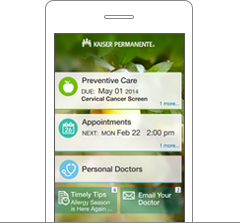
My Doctor Online
Some things are easier to remember than others. For Northern California Kaiser Permanente members, remembering doctor’s appointments and immunizations just got easier.
For Northern California Members Only.


My KP Meds
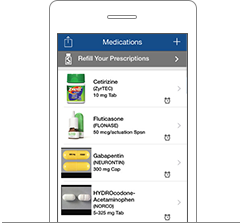
My KP Meds
View your list of medications from your Kaiser Permanente medical record and set reminders to help you remember how much medication to take and when to take it.
For Northern California Members Only.
Kaiser Permanente
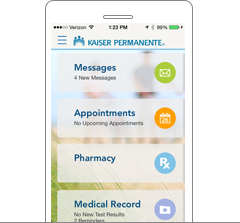
Kaiser Permanente
The redesign includes a colorful new interface, tools that make it faster and easier to use, and new quick-access menus that let you get advice, schedule appointments, and refill prescriptions.